Archive for Conferences

ADNDRC Beijing Training and Seminar

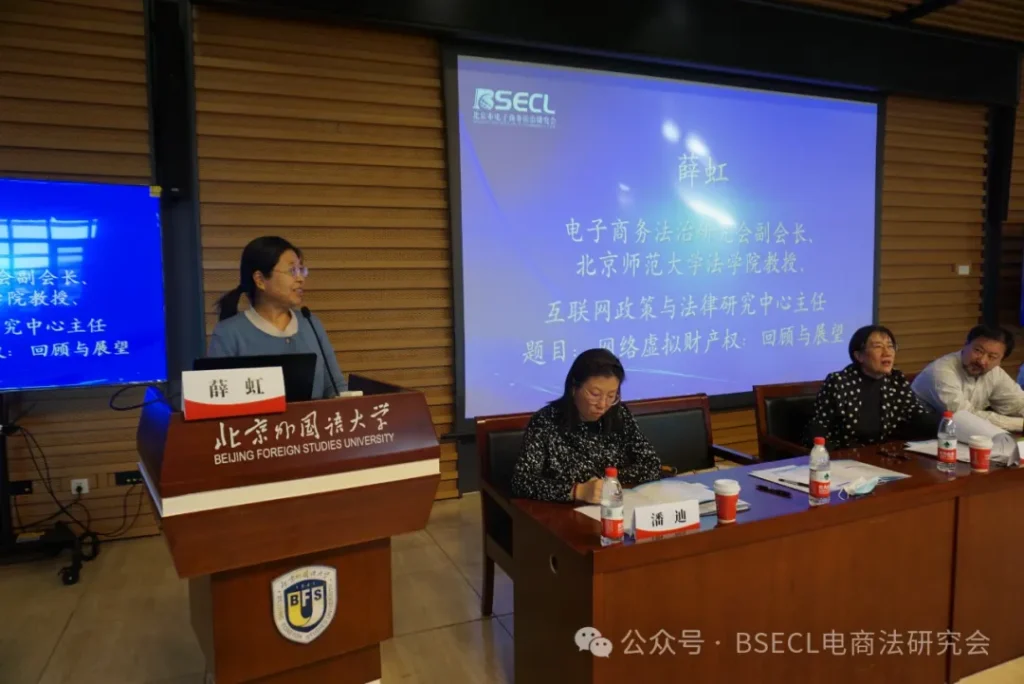
2025 Asian Domain Name Dispute Resolution Center (ADNDRC) Training Program on Domain Name Practices and Development and Seminar on Global Digital Brand Protection and Domain Name Strategy was held on 19 May 2025 in Beijing. The events were organized by the ADNDRC and co-organized CIETAC Online Dispute Resolution Center, HKIAC, KIDRC and AIAC. The Training and Seminar were conducted in the hybrid mode. More than 120 scholars, entrepreneurs, legal professionals and other representatives specializing in domain name or legal practices from China, Hong Kong, Korea and Malaysia participating in person or online. The theme was on Building up the Global Digital Brand Defense System. ICANN Asia Pacific Multi-stakeholder Senior Supervisor, Mr. Zhang JC, introduced the new developments on ICANN domain name policies, particularly on the UDRP review and new gTLD program. China Domain Name Engineering Center (ZDNS) Senior Director of International Affairs, Ms. Liu HY, introduced the Implication of Global Digital Brand Construction and Trademark Protection. Markmonitor General Manager (China), Mr. Zhang Y, talked about how to identify domain name infringements by trademark protection organizations.
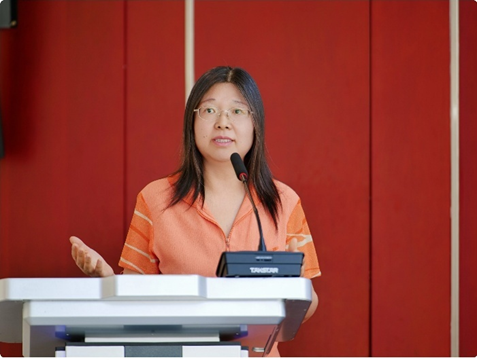
Prof. Hong Xue, Co-Director of CIETAC Domain Name Center and Director of Beijing Normal University Institute of Internet Policy & Law, gave the keynote speech on Exploration of Dispute Resolution of Network Virtual Property. Prof. Xue elaborated that domain names may be eligible of network virtual property based on their characters of uniqueness, exclusive virtual control and commercial value. Along with the other digital goods, such as NFTs or crypto-currencies, the new dispute resolution mechanism for network virtual property may need to be developed and/or incorporated into the existing system. The events were well-received by the audience.

Comments off

Prof. Xue gave the keynote speech at ITC Jamaica Capacity Building Session

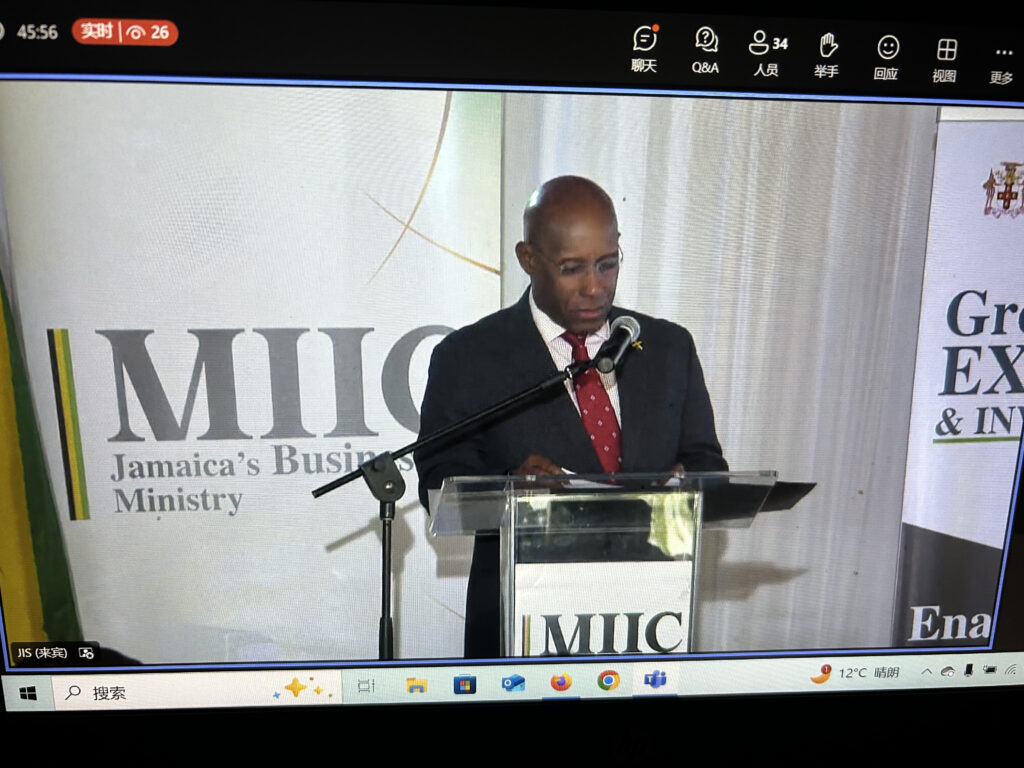
On 19 March 2025, Jamaica Ministry of Industry, Investment and Commerce (MIIC) and the International Trade Centre (ITC), a joint agency of the UN and the WTO jointly organized the hybrid “Capacity building session on creating an enabling policy environment for e-commerce and digital economy”.

Developing economies face complex challenges in creating enabling frameworks that facilitate e-commerce and digital trade while ensuring inclusive and sustainable growth. Many countries are striving to improve their regulatory framework and strengthen regulatory capacity to address new regulatory challenges. Internationally, efforts to harmonize e- commerce regulatory frameworks and practices are advancing through key multilateral bodies. The United Nations Commission on International Trade Law (UNCITRAL) has developed model laws and standards for electronic transferable records, while the World Trade Organization (WTO) leads negotiations through a Joint Statement Initiative (JSI) on e-commerce, aiming to create a set of common international rules across a range of e-commerce areas such as enabling e-commerce, openness, and trust in digital trade.

As Jamaica aims to create a conducive policy environment for e-commerce and align its domestic regulations with international standards, including in the ongoing processes on E-Transactions Act and the Consumer Welfare and Protection Policy, this webinar session aims to inform about, and discuss, the current development in global rule-setting on e-commerce and digital trade. It will focus on how these international rules can shape and influence the future of digital trade as well as facilitate legislative and regulatory processes in Jamaica. This webinar will also delve into practical approaches to domestic policy implementation, highlighting crucial enabling legislative frameworks that can foster and accelerate e-commerce growth.

Prof. Xue, along with other high-level officials from Jamaica, ITC and UNCITRAL, gave a keynote speech on “Developing enabling policy frameworks for e-commerce – experience of China”. Prof. Xue compared the Chinese E-Commerce Law and the Jamaican E-Transaction Act, elaborated the Chinese legal innovation regarding regulating digital trade, and shared the Chinese experience on e-commerce platform governance. The speech was well-received by the policymakers and key authorities responsible for e-commerce and the digital economy.

The session engaged the stakeholders in ongoing consultations regarding the issues being discussed in the WTO Work Program on E-commerce (WPEC) and the development of Jamaica’s position on the WTO Joint Statement Initiative (JSI) (E-commerce negotiations).

Comments off

薛教授在数字经济领域消费者权益保护与促进发展研讨会上主题演讲

2024年12月7日,由北京市法学会电子商务法治研究会主办,北京外国语大学法学院、北京工商大学法学院等单位承办的北京市法学会电子商务法治研究会2024年年会暨数字经济领域消费者权益保护与促进发展研讨会成功举办。来自国家市场监管总局、中国消费者协会、北京市法学会、北京市市场监管局、北京互联网法院、北京大学、清华大学、中国政法大学、平台企业、律师事务所、新闻媒体等40多家单位共120余位电子商务领域专家学者和研究会理事、会员齐聚一堂,回顾总结2024年研究会的最新工作进展、展望2025年电子商务法治发展新的愿景,围绕“数字经济领域消费者权益保护与促进发展”主题开展深入交流讨论、分享和交流各自的观点。

北京师范大学法学院教授、互联网政策与法律研究中心主任薛虹以“网络虚拟财产权:回顾与展望”为题作主题演讲,指出网络虚拟财产与知识产权(特别是版权存在本质性区别),从物质性财产权的角度,研究其性质和权属更加合理。但受限于系统拥有者的终极控制,更类似于用益物权,希望未来能有更好的法律框架来保护数字消费者的权益。

Comments off

北师大全球发展战略合作伙伴计划专项“参与电子商务国际贸易立法实践研究”讲座

2024年10月30日下午,北师大全球发展战略合作伙伴计划专项“参与电子商务国际贸易立法实践研究”讲座在北京师范大学教九502成功举办。此次讲座由北京师范大学法学院薛虹教授担任主讲人,米兰大学名誉教授、罗马LUISS大学知识产权和竞争法高级教授、国际知识产权教学与研究促进会前任主席Gustavo Ghidini先生作为客座嘉宾。

薛虹教授详细讲解世界贸易组织(WTO)多边贸易体制及世界贸易组织知识产权协定(TRIPS协议)的主要法律制度。客座嘉宾回顾了知识产权法的历史,认为TRIPS协定给予发展中国家和最不发达国家的过渡期过短使它们处于不利地位,主张给予最不发达国家永久性豁免。薛虹教授解释了多边贸易体制和TRIPS协定对于我国等发展中国家的积极意义,指出客座嘉宾观点的偏狭和不足,鼓励同学们深入思考兼听则明。

讲座的精彩内容开拓同学们的视野,并引发同学们的思考和讨论,取得了良好的效果。

Comments off

2024 UNCITRAL Asia Pacific Day Memorial Lecture & BNU International Expert Lecture Series (Number 8)

On the evening of October 29, 2024, UNCITRAL Asia Pacific Day Memorial Lecture & BNU International Expert Lecture Series (Number 8) was successfully held at the Law School of Beijing Normal University.

Professor Xue Hong of the Law School of Beijing Normal University introduced that BNU, as one of the CLOUT Partner Organizations, had been working closely with UNCITRAL, including presenting at the UNCITRAL Seminar on Development of Electronic Transferable Records and Electronic Bills of Lading held in Dalian May 2024 and the CLOUT virtual networking meeting in November 2024. Prof. Xue also elaborates the newest Model Law on Automatic Contracting and other Model Laws developed by UNCITRAL over 2023-2024.

Prof. Xue then invite Mr. Gustavo Ghidini, Honorary Professor of the University of Milan, Senior Professor of Intellectual Property and Competition Law at the LUISS University of Rome, and former President of the International Association for the Promotion of Intellectual Property Teaching and Research, to give the keynote speech.

Prof. Gustavo Ghidini delved into the impact of the European Artificial Intelligence Act and the challenges of AI-generated content to IP. He emphasized the duality of AI systems, distinguishing between systems driven by detailed human instructions and self-generated systems, and noted that AI outputs should not be protected by copyright if they lacked human authorship, advocating a case-by-case approach. At the same time, he discussed the potential conflict between the use of AI training data and existing intellectual property rights, proposing a new intellectual property paradigm that aims to reconcile innovation with fair compensation for data owners. Professor Ghidini emphasized that regulation on AI innovation and the need for the law should keep up with technological advances.

Professor Xue Hong pointed out as the commentator that the Prof. Ghidini’s three-part discussion on AI algorithms, generated content and training data is very insightful and relevant to the auto-contracting process pervasive in digital economy, and his views on the use of training data by artificial intelligence are very enlightening in copyright law, but the proposition of excluding some so-called simple instruction-generated content from copyright protection may only be theoretical hypotheses, lack of feasibility, and is inconsistent with the judicial practice in Europe and China.

The Lecture attracted graduate students and international exchange students from China, Poland, Ethiopia, the Netherlands, and Italy. At the end of the Lecture, two Professors patiently answered the questions of many doctoral students, master-degree students and international exchange students. The healthy academic confrontation and the wonderful interaction between the lecturer and the reviewer aroused the students’ interest in learning, and everyone discussed extensively and thought deeply, and spoke highly of the lecture.

Comments off

« Previous Page« Previous entries « Previous Page · Next Page » Next entries »Next Page »