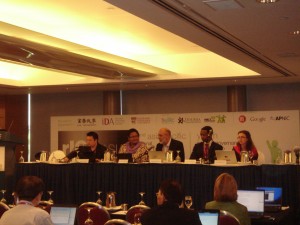
首届亚太互联网治理国际研讨会成功在京举行

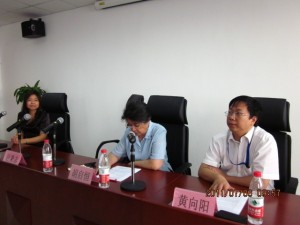
 2011年7月6-7日,由北京师范大学互联网政策与法律研究中心主办、中国互联网信息中心(CNNIC)、政务和公益机构域名注册管理中心(CONAC)、亚太互联网信息中心(APNIC)、新加坡互联网研究中心、.Asia以及.Telnic 等多家单位协办的亚太互联网治理国际研讨会APILP在法学院18层学术报告厅隆重举行。北京师范大学法学两院院长赵秉志、互联网政策与法律研究中心主任薛虹教授、中国互联网协会理事长胡启恒女士、中国互联网信息中心(CNNIC)主任黄向阳教授、政务和公益机构域名注册管理中心(CONAC)副主任唐贤强先生、最高人民法院研究中心主任罗东川法官、北京第二中级人民法院民庭庭长王范武先生、最高人民法院知识产权法庭马秀荣法官、CNNIC的发展研究中心副主任沈烁博士、CIETAC副秘书长李虎博士、新加坡互联网研究中心主任Peng Hwa Ang教授、日本互联网治理核心小组的联合协调员Izumi Aizu教授、ICANN理事吴国维教授、互联网协会公共政策高级官员Christine Runnegar女士、印度NALSAR大学法学院V.C. Vivekanandan教授、APNIC培训官员Champika Wijayatunga先生等出席了此次会议并发言。

在本次研讨会中,诸多青年学子们也积极参与其中,纷纷提问和发言,和与会专家探讨了许多有关互联网综合治理的问题。与会人员畅所欲言、气氛活跃而融洽,既为国内外互联网领域的专家们提供了深入探讨互联网治理方面的机会,也加大了我院在互联网领域的学术影响力,更为亚太互联网治理起到了积极的推动作用。

首届亚太互联网治理国际研讨会议程

2011767日 中国北京北京师范大学新主楼18层法学院会议室

主办方:北京师范大学互联网政策与法律研究中心

赞助方:CNNIC, CONAC, APNIC, .Asia, Singapore Internet Research Center, .Tel.

201176日,星期三(第一天)

8:309:30 注册

9:3012:30 开幕式和情况介绍

互联网治理的介绍——亚太的未来发展

演讲和讨论将着眼于互联网治理和当前政策与法律框架内的一般问题和原则规定。通过历史性回顾和盘点,分析并评价开放性、可访问性、多样性和安全性的原则。演讲和讨论将专门针对亚太地区关注的问题和重点展开。

9:3010:30 欢迎仪式

主持人:薛虹教授 北京师范大学互联网政策与法律研究中心主任

演讲者:

赵秉志教授 北京师范大学法学院、刑事法律科学研究院院长

胡启恒女士 中国互联网协会理事长

黄向阳教授 中国互联网信息中心(CNNIC)主任

唐贤强先生  政务和公益机构域名注册管理中心(CONAC)副主任

10:40-11:10 与会者自我介绍

11:10-12:30 主题演讲

Peng Hwa Ang教授 新加坡互联网研究中心主任,南洋理工大学

Izumi Aizu教授 日本多摩大学,互联网治理核心小组的联合协调员

12:30-14:30 午餐

14:3017:30 互联网技术和结构:由亚太互联网信息中心(APNIC)进行培训

此部分将详细说明互联网如何工作,协调处理系统的组织有哪些,在该系统中这些组织之间的相互关系和互联网社会的决定是如何做出的。

主持人:Champika Wijayatunga先生APNIC培训经理

演讲者:

沈烁博士CNNIC的发展研究中心副主任

Champika Wijayatunga先生APNIC培训经理

17:30 APNIC欢迎晚宴

201177日,星期四(第二天)

9:0012:00 关键互联网资源的管理

讲座和论坛讨论将对当前的关键互联网资源管理制度,特别是对多样性、可访问性和安全性有重要影响的ICANN域名政策进行考察。

9:0010:00 新通用顶级域的问题

主持人:吳國維教授 ICANN理事

播放ICANN关于新增通用顶级域名的国际推广活动的短片

讨论者:HKIRC, CNNIC, CONAC, .Asia, .Telnet, JPNIC, Zodiacs

10:1512:00 注册管理的比较研究(国际化域名、纵向整合、商标措施、支持发展中国家,whois的准确性,非法内容)

主持人:Edmon Chung先生DotAsia首席执行官&ALAC成员

演讲者:Bonnie Chun女士HKIRC官员

沈烁博士 CNNIC的发展研究中心副主任

俞阳先生 CONAC国际、法律部主任

Edmon Chung先生DotAsia首席执行官

Lucy Wang女士 .Telnet总经理

James Seng先生 Zodiac首席执行官

12:00-14:00 午餐

14:0017:00 互联网址里的关键法律问题

讲座涉及一系列法律问题,例如域名纠纷的替代争议解决和互联网服务提供者的中介责任。

14:0014:45 替代争议解决(ADR)和信息保护

主持人:Christine Runnegar女士,公共政策高级经理,ISOC

演讲者:Christine Runnegar女士,公共政策高级经理,ISOC

李虎博士 CIETAC副秘书长

王范武先生 北京第二中级人民法院民庭庭长

15:0017:00 互联网版权

主持人:薛虹教授 北京师范大学互联网政策与法律研究中心主任

演讲者:

罗东川法官 最高人民法院应用法律研究所所长

葛红法官 北京第二中级人民法院知识产权庭

马秀荣法官 最高人民法院知识产权审判庭

V.C. Vivekanandan教授 印度NALSAR大学法学院

17:00 闭幕式

17:30 DotAsia欢送晚宴


Comments off

AP Regional IGF and ICANN in Singapore

Mid-June was a busy time. 2 Internet events was held in Singapore consecutively. The 2nd Asia Pacific Regional IGF was on June 15-16, 2011 in Singapore Suntec Center and ICANN meeting was on June 19-24, 2011 in Raffles Place.

Regional IGF was a policy discussion form involving a couple of stakeholder groups. Although few local participants joined the event, the Regional IGF attracted many overseas visitors. Prof. Xue chaired the plenary session “Anti-Counterfeit and Other Controversies” and managed to organize interesting presentations and discussions.

Introduction

The Anti-Counterfeit Trade Agreement would be a treaty to put in place new and higher international standards on intellectual property enforcement. Apart from its obvious TRIPS-Plus nature and forceful use of ISPs as private police, ACTA reveals a couple of critically important aspects that deserve careful scrutiny from the perspective of Internet Governance. ACTA’s plurilateral and closed negotiation process directly goes against the multi-stakeholder and open and transparent participation principles developed for Internet Governance. ACTA’s narrow focus on intellectual property rights ignores human rights concerns, especially free speech and access to the Internet, that are essential in the information society. ACTA demonstrate the temptation to shift from the existing multilateral WIPO-WTO regime to a more restricted and opaque system to enforce the private exclusive rights on the global information network. In addition, other domestic (such as US Bill “Combating Online Infringement and Counterfeits Act (COICA)”) or private (such as ICANN’s trademark measures in new gTLD process) enforcement measures for intellectual property will exert significant global impact. The session intends to have a vivid discussion on all these interesting issues in the most populous and economic-booming region of the world.

Chair: Hong Xue (Beijing Normal University)

Speakers included academics, businesses and technical community from US, Switzerland, Hong Kong SAR, New Zealand and Malaysia.

Summary

This session talked about the following issues:

a)      Specific legal initiative, such as US new legislative initiative, especially protecting IP to use domain name system to enforce intellectual property rights. Intermediary liability has always been a big issue for the development of internet, cloud computing and its impact on intellectual property.

b)      Obviously, our focus of discussion has been on anti-counterfeit trade agreement. The forum shifting from multilateral to plurlateral, and the local response to this ACTA negotiation process.

A couple of lessons learned from the discussions.

Lesson 1 is that most people agree on the process for making IP law or policy should be opened and transparent. The secrecy of ACTA negotiation is really the wrong way to presume the IP interest and will not balance the whole system.

Lesson 2 is that internet property should be updated and refreshed. Internet property was created after industrial revolution and international IP regime has been going on for more than 100 years. However, we are now facing the new business model, new media environment and especially the new way of life. In order to make intellectual property effective, internet, in our new social media environment, to make it relevant to our real life, and need to be remixed, and recreated. Intellectual property is supposed to protect creation and stimulate originality. It should be able to be creative by itself. It should not be stifled and refused to respond to new business and media environment.

Lesson 3 is that we believe intellectual property is only a link of the whole social life, so it should be accessed in a wider context and take into account the impact on consumer protection, on business competition and especially on human right protection, including but not limited to privacy and free speech.

Prof. Xue was also panelists of the other two parallel sessions, i.e. ICANN and New gTLD and International Law Enforcement. The conference materials are on the website.
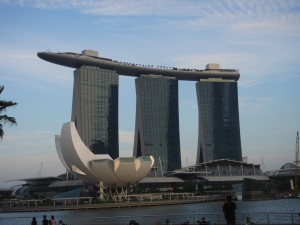
ICANN meeting in Singapore immediately followed the regional IGF. After more than 10 years’ debates and 6 years’ policy making and despite pressure from GAC and USG, ICANN Board finally approved the new gTLD program around 12:00pm on June 20, 2011.  Few people applauded at the decision but many others were too tired and fed up by the long process to be excited.

Prof. Xue raised a visionary question at the Public Forum but was interrupted by the stepping down Chair of Board who seemed wanting to spend most of the time ceremonially, well for his friend. The question is about the implementation of the so-called trademark clearing house. Not only non-Latin trademarks could be excluded as “device marks” by a database operators who know nothing about the trademark scripts, but the trademark service providers without knowledge of Chinese language would deem the domain names in simplified characters not visually similar to the trademark in traditional characters, vice verse. It seems the very technical variants table would have to be referred by both the database operator and verification center to prevent “variant-squatting” in new gTLD process. Unfortunately ICANN Board did not have the chance to listen to such important view.
Comments off

WIPO Asia Regional Seminar on Copyright and Internet Intermediaries


The WIPO Seminar was held in May 25-26, 2011 in Bangkok. Officials from WIPO, Thailand, Korea , China, India, Philippians, Nepal, Pakistan and a few other Asian countries participated in the Seminar and briefed on the pertinent countries’ legal development of copyright law and intermediary liability. Generally, Asian countries, big or small, either have recently enacted or revised the copyright laws or are going to do so. It is noteworthy that the emerging powers or new economies in Asia like China and India are revising their copyright laws respectively, which could have impact in the international arena. Digital technology and free trade  are the driving force for the new wave of law-making. The most interesting parts are the presentations by the Resource Persons (Legal Experts) invited by WIPO. Prof. Xue, as the only Resource Person from China, gave a presentation and participated in the subsequent discussions.

Intermediary liability is a critical issues across the jurisdictions and legal systems. Given that no treaty law available on this issues (two WIPO Internet Treaties generally silent on this), a series of studies to exam the comparability and compatibility across the legal systems are very necessary. The three pillars of the liability, namely configuration, limitation (safe harbor defenses) and assistance obligations, are all evolving in Anglo-American common law, civil law, EU law and Chinese law. There are a rich body of statutes and cases available for the comparative study.

It’s been raised in China whether web cache is caching, which may be eligible for safe harbor defense? Web caching, which has been existing from or before Google, is generated by spiders of search engines proactively, rather than triggered responsively by the request of the users, may have insignificant technical difference from caching. However, legally it would be very absurd to distinguish them. If web caching is not caching for the purpose of DMCA Sec.512 (d), what else would be more applicable? It is obviously “automatic storage” in terms of the Chinese Regulations on Right of Communication via Information Network. It is argued that the originator (or source of communicator) has lost the control of cached contents. But this is wrong again. Even for the responsive caching, the originate is still at the mercy of the caching system, rather than having the capacity of direct control. Distinction of the proactive caching from the responsive one can only distort the well-established defense system for the secondary liability. As far as it is automatic storage to improve the efficiency of transmission, it is the caching and should be directly liable for infringement. Otherwise, we have to take down the whole Google, Baidu, Yahoo and all the other search engines. The law-making and judicial practices should be fool-proved and not affected by the biased (for undisclosed commercial interests) minds.

Also it is despising that many Chinese IP academicians are doing research based on indirect and outdated information. One guys boldly stated French 3-strike law (HADOPI) was struck out by the Constitutional Court “in May 2011”! How odds. Didn’t he know that that what was knocked out is the 1st Version of the Law in 2 years ago and the 2nd Version had long been passed by French Legislature a month later.  The Law has been implemented for 2 years. Ignorance is absolutely the enemy of knowledge.

Comments off

COE Internet Freedom Conference

Council of Europe organized the “Internet Freedom Conference: From Principles to Global Treaty Law? Content, Stakeholders and Form” on April 18-19 in Strasbourg, France. The Conference Video is now available online. I joined the conference and presented at “Panel 5: International lawmaking in their respective roles and responsibilities.” Although there are documents available, I’d suggest everyone take a look at the videos that are much more revealing.

The Conference is interesting in several aspects. Firstly, CoE published two background documents for discussions. One is “Internet Governance Principles” and the other is “Protection and Promotion of Internet’s Universality, Integrity and Openness.” According to CoE’s interpretation, the former one is applicable to all stakeholders while the latter primarily applies to the Member States. These documents are no doubt thoughtful outputs on Internet Governance, although they are obviously still under construction. Some contents are missing and some needs to be adjusted. Secondly, CoE is now taking brave steps to measure the possibility of having a “global” treaty law on Internet governance, after the successful enactment of Cybercrime Convention. Although the name is weird to legal community–there has no global but “international” treaty law, it may open up our mind as I stated on a few critical governance issues, such as cyber-peace, cyber-security and cyber-openness. Thirdly, it is really interesting to watch the extremely diverse reaction from different stakeholder groups. Governments seem naturally supportive to treaty regime while business community casts serious doubt on it. Civil society and academic have different views and mixed feelings about “legalization” of Internet governance. Finally it was a very fruitful and inspiring brainstorming. It is amazing that there could be so many participants from Europe community. I talked briefly with the two other colleagues from Asia. We all agree that it would not be possible for Asia to reach the same level maturity in any near future.

The city of Strasbourg is lovable. I took a boat trip with Bill on the picturesque Ill River and enjoyed watching the water leverages learned from China. Wow, knowledge wants to share! The chatting afterward was as pleasant as the weather.


Comments off

Answer Blowing in the Wind

山中相送罢

日暮掩柴扉

春草明年绿

王孙归不归

In the Traditional Calendar, it will soon be Qing Ming. Unlike Halloween, Qing Ming is not a playful day and absolutely not for children. It is a day to memorize the ancestors and the other dead family. It is also a day for everyone to review the past and think about the meaning of remaining life. I guess only Chinese who can maintain such a meditation “holiday” that links up the spiritual world with the reality, the past with the future, and the dead with the live.

Meditation can make people calm down and purify their thought. But meditation may not always provide the answer people are seeking for. How many times must Baidu be sued before we can know the right and wrong in cyberspace? Baidu that occupies 70% of Internet search market in China was pushed into spotlight by a group of well-know novelists who are angry at the Baidu’s document file-share services that enable millions of literary works (particularly novels) be uploaded and shared among Internet users. Baidu had been sued for a couple of times by phonograph industry for MP3 file-sharing services. However, the contradictory decisions made by a variety of courts under the influence of those “Gold-Ruble” scholars only serve to confuse the public and blur the line of right and wrong. I’m now in belief that the liability of inducement may not be a bad solution, because it could put an end to the game of “catch-me-if-you-can” played by those intermediaries in genuine bad faith.

Yes, the file-sharing services are free of charge to users, but they are profiting from commercial ads; Yes, there is “safe harbor” available in the law, it should never shield intentional and systematic infringers; Yes, people need to access information and copyright works, but the danger to let a commercial company to maintain a major information channel to the public is even more acute and penetrating. Cannot the people see that they will be at the mercy of a company if it is allowed to monopolize the source of information and knowledge? If one day, you can only read a novel from Baidu, you would have to accept any condition Baidu imposes on you. In a poor competitive environment, the danger of such monopoly is imminent.

An interview of mine on Baidu case has been published at BNU Newspaper on April 11, 2011.

My view on Google Book Project (article published on China Copyright, Issue 1, 2011) has been completely proved by the Decision of Judge Denny Chin in U.S. district court in Manhattan. I don’t think Baidu’s services is anything better than Google’s project that also labeled as a service to the public. But the answer to Baidu’s case is still blowing in the wind in this thousand-year old country.


Comments off

« Previous Page« Previous entries « Previous Page · Next Page » Next entries »Next Page »